
QuLIPA
Quantum Limited Inductance Parametric Amplifier
Breaking Through the Noise Barrier
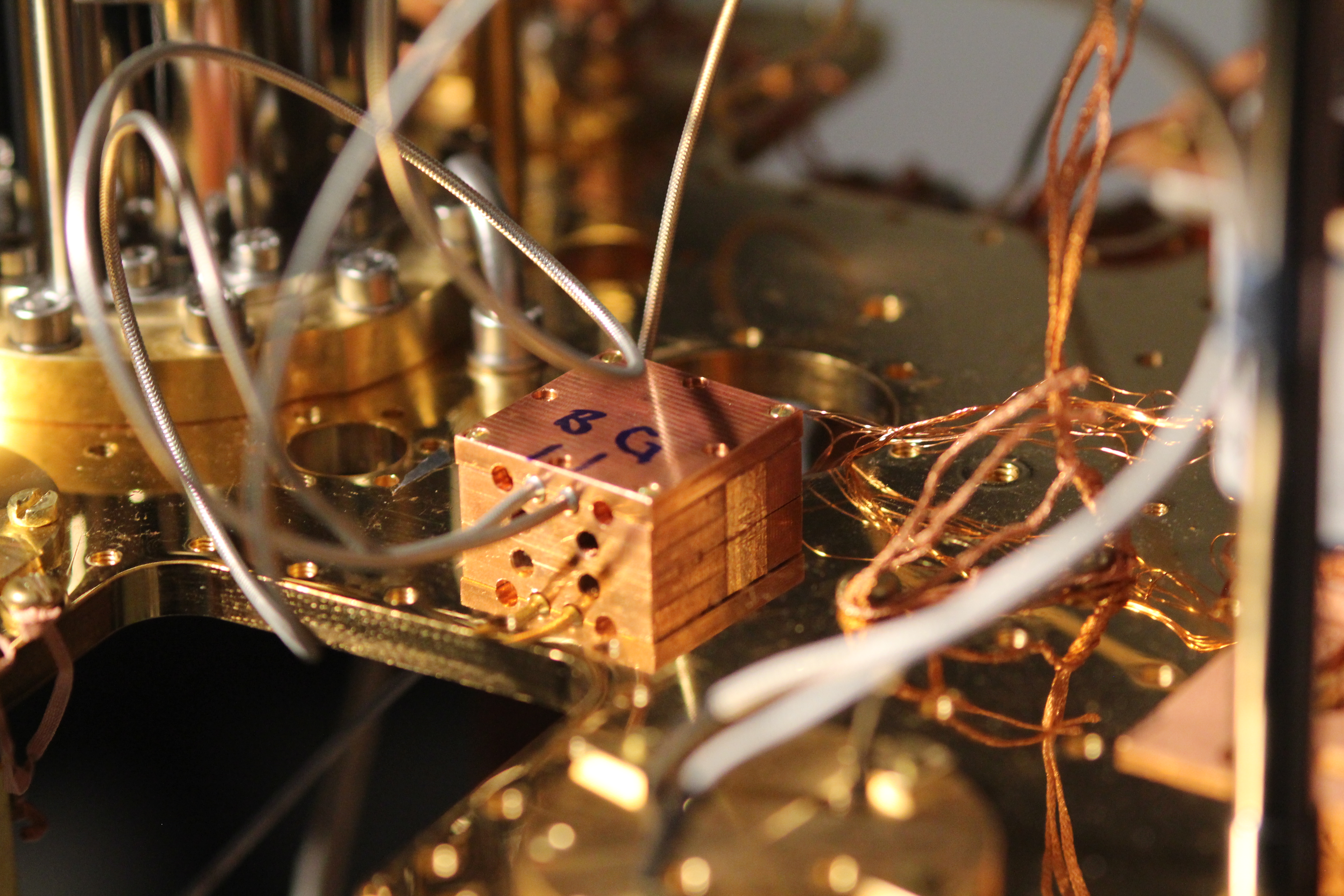
Classical amplification techniques struggle to amplify small signals without introducing significant noise, compromising output signal fidelity.
Current quantum methods, such as the Josephson Parametric Amplifier (JPA) and Josephson Traveling Wave Parametric Amplifier (JTWPA), are designed to introduce the least amount of added noise allowed by quantum mechanics. However, even these technologies have significant disadvantages. They are expensive, difficult to manufacture, and require dilution refrigeration systems to operate at extremely low temperatures, all while having poor power handling capabilities.
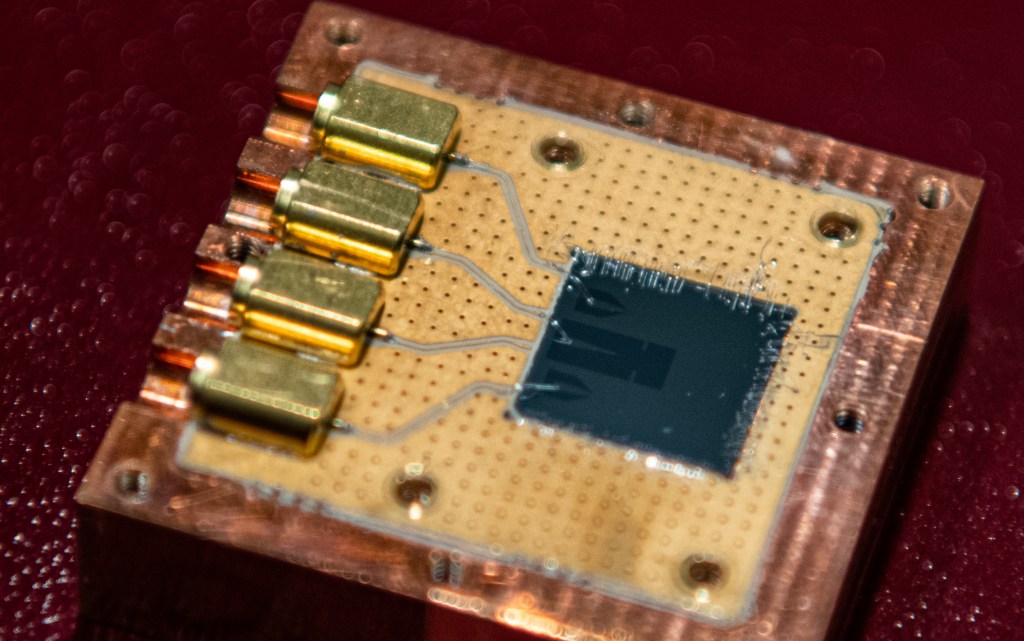
Our Amplifier overcomes these limitations. It operates at temperatures up to 4.5 degrees Kelvin, handles up to 1 Tesla magnetic field strengths, and has 3 orders of magnitude improvement in power handling, all while providing equal quantum noise performance to its JPA counterpart.
This innovative technology not only offers more powerful amplification but also does so at a fraction of the cost, making it a more accessible and commercially viable solution.
We are currently in the prototyping and deployment stage, seeking investors to bring this groundbreaking technology to market.
Our Solution
Operating Temperature
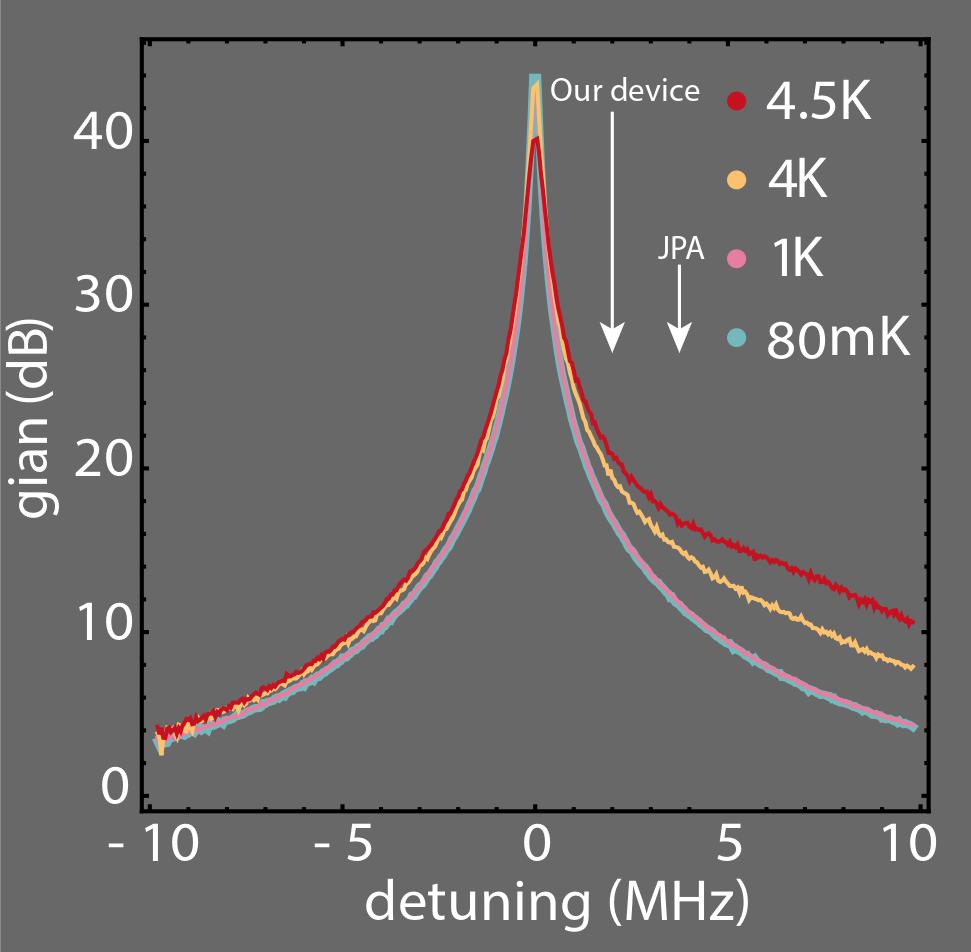
Due to the novel superconducting material we use to build our amplifiers, we can operate them at temperatures much higher that what is currently possible. A JPA must operate at a max temperature of 1K but usually become unstable and easily perturbed and so must operate at even lower temperatures. Our Amplifier operates at 4.5K while keeping high gain and bandwidth performance. This means that our device can be operated with smaller and cheaper cryostats that don’t require expensive materials and constant monitoring.
dB Compression
A standard measure of performance for any amplifier is it’s 1-dB compression power. This is the amount of input power required to saturate an amplifier and lower it’s gain by 1dB. Typical JPA technologies have 1-dB compression power on average of -105 dBm at 20dB gain, while our devices have a 1-dB compression of -73 dBm at 21dB of gain. This means that our amplifiers can handle 1500x more powerful input signals then the next leading technology (JPA).

Noise Introduction
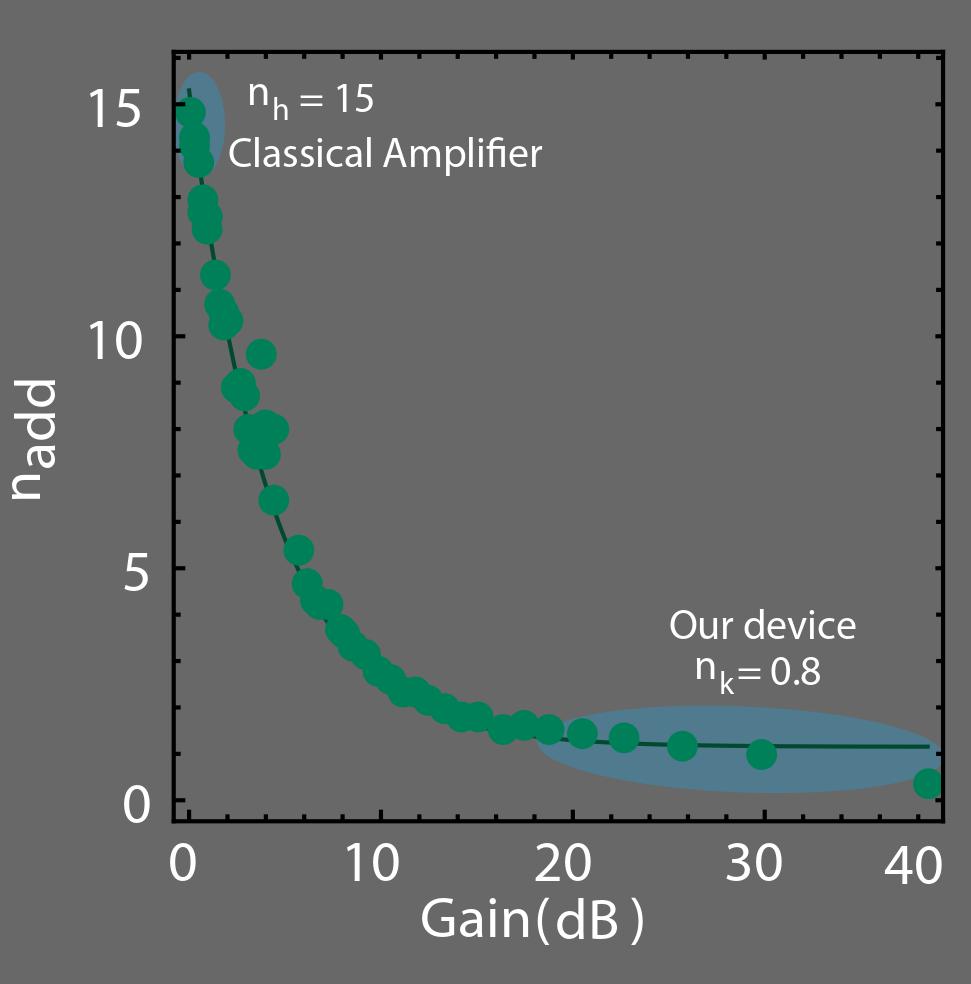
Quantum mechanics necessitates that any amplifier must add some amount of energy to an input signal. We call this added energy noise, as it is an energy that can hinder our ability to measure the desired amplified signal. So having an amplifier that introduces small amounts of noise is not only desired but also necessary in some applications. When we compare our amplifier to classical versions we can see an improvement in the noise of over 40x, which allows for the amplification of sensitive signals reliably.
Key Benefits
Powerful Signal Amplification
- Simultaneously amplifies thousands of low-intensity signals which would otherwise be undetectable
- Maintains signal integrity by introducing minimal noise, impossible with classical methods
Versatile
- Ideal for fields requiring ultra-sensitive signal detection
- Wide range of applications in quantum computing, healthcare and biotechnology, geology, space and astronomy, and more
- Accessible to researchers and industry leaders alike
Affordable & Compact Design
- High temperature performance eliminates the need for bulky refrigeration equipment
- More affordable than traditional quantum amplifiers, reducing overall operational costs
- Accessible to a broader range of users and industries
Practical & Commercially Available
- Simple and intuitive to use
- A ready for market solution that combines cutting-edge technology with practical application, making advanced signal amplification accessible and efficient

 QuantaSense